
Diagnostic Guide
Why are my plant leaves turning yellow?
Yellow leaves can result from watering problems, nutrient deficiencies, disease, pests, or normal aging.
Last reviewed: August 6, 2026 · Sources: Penn State Extension, University of Minnesota Extension, University of California IPM
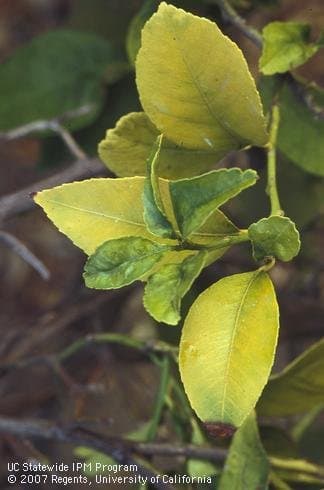
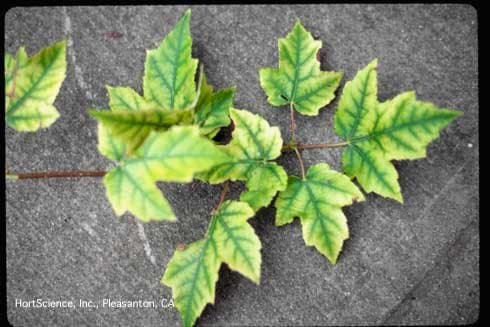
Start with the visible pattern
| What you see | Most likely cause | Check first |
|---|---|---|
| Lower leaves yellow | Natural aging or nitrogen deficiency | Compare older leaves to new growth |
| Yellow leaves with wet soil | Overwatering or poor drainage | Check soil moisture and drainage |
| Yellowing between veins | Iron or other nutrient issue | Look at leaf pattern and newest growth |
| Yellow leaves with white coating | Powdery mildew | Inspect leaf surfaces for powder |
Push a finger about two inches into the soil. If the soil remains wet several days after watering, poor drainage or excess watering may be involved.
Simple checks before you buy anything
Most garden problems have more than one possible cause. Start with the simplest explanation.
- Check the soil before adding fertilizer.
- Notice whether old leaves or new leaves changed first.
- Look for spots, powder, or distorted growth before treating for pests.
Most likely causes to check first
Overwatering
Confidence: 94%Overwatering keeps roots deprived of oxygen and often shows up as yellow leaves, drooping, and soil that stays wet too long.
- Check whether the top two inches of soil are still damp several days after watering.
- Look for drooping paired with wet soil rather than dry soil.
- Inspect drainage holes or bed drainage before adding fertilizer.
Nitrogen deficiency
Confidence: 62%Nitrogen deficiency usually shows up first on older leaves, which turn pale or yellow while newer growth stays greener.
- Check whether older lower leaves are affected before newer leaves.
- Compare overall growth to healthy plants of the same age.
- Review recent fertilizing history before making changes.
Poor drainage
Confidence: 58%Poor drainage traps water around roots and can mimic disease, nutrient issues, or general decline.
- Watch how long the bed or container stays wet after irrigation or rain.
- Dig a small test hole to see whether water pools below the surface.
- Check for compacted soil or blocked drainage holes.
Iron or manganese deficiency
Confidence: 40%Iron and manganese deficiency show up as yellowing between the leaf veins while the veins themselves stay green, usually on new growth first. High soil pH is the most common reason the plant can't take up iron or manganese that's already present in the soil.
- Check whether yellowing appears between the veins while the veins stay green.
- Note whether it shows up on new growth first, unlike nitrogen deficiency which affects older leaves first.
- Test soil pH, since alkaline soil is the most common reason these micronutrients become unavailable to roots.
Powdery mildew
Confidence: 34%Powdery mildew creates a white, dusty coating on leaves and spreads more easily where airflow is poor.
- Look for a dusty white coating on leaf surfaces.
- Check whether crowded growth is limiting airflow.
- Remove a leaf and compare symptoms across several plants.
Reference material used on this page
Penn State Extension
Watering, drainage, and root stress
Publication date: 2025
Visit sourceUniversity of Minnesota Extension
Nitrogen and iron deficiency symptoms
Publication date: 2024
Visit sourceUniversity of California IPM
Powdery mildew identification and control
Publication date: 2025
Visit sourceGet the free GardenMD Quick Reference Guide
A printable symptom cheat sheet and seed starting calendar, sent straight to your inbox.
No spam. Unsubscribe anytime.